Scroll down to D0vvnl0ad
Bring a Living Wildlife System to Minecraft Bedrock
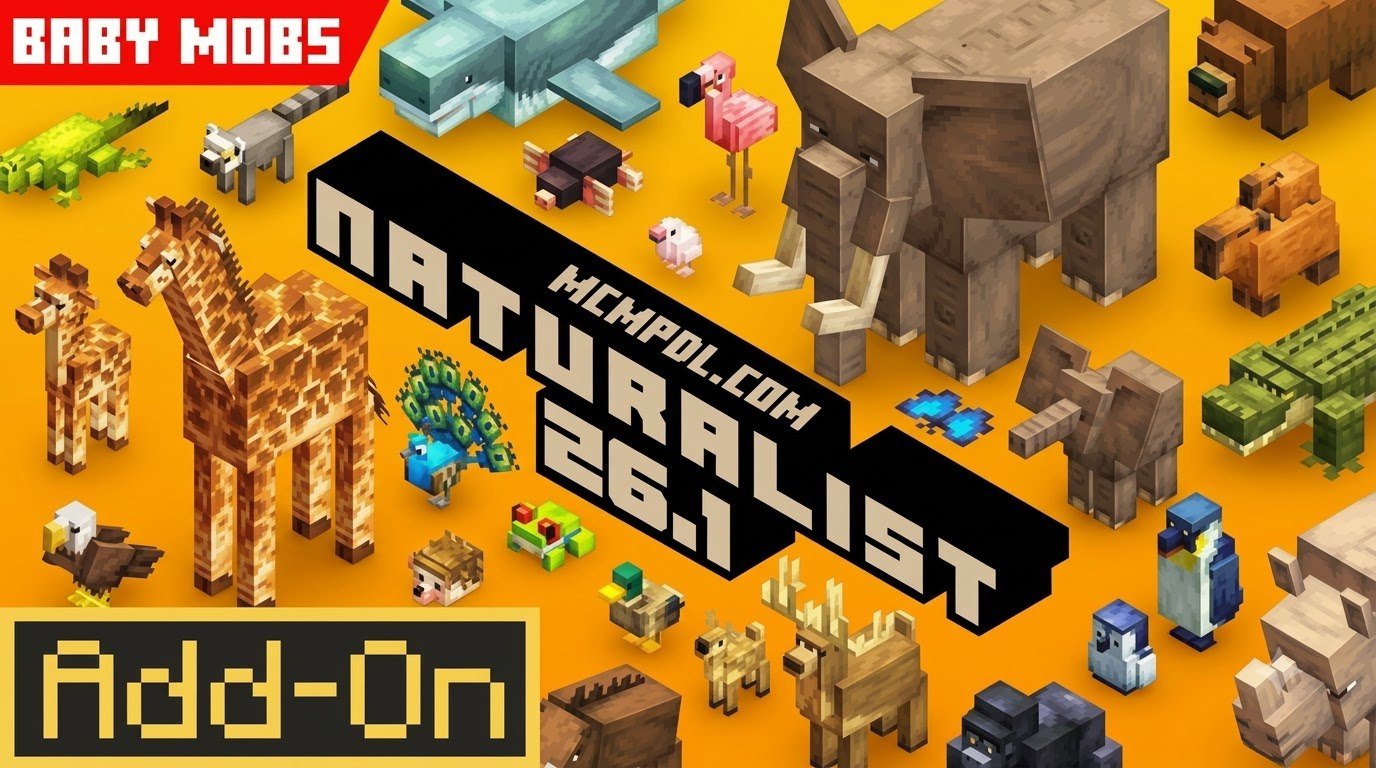
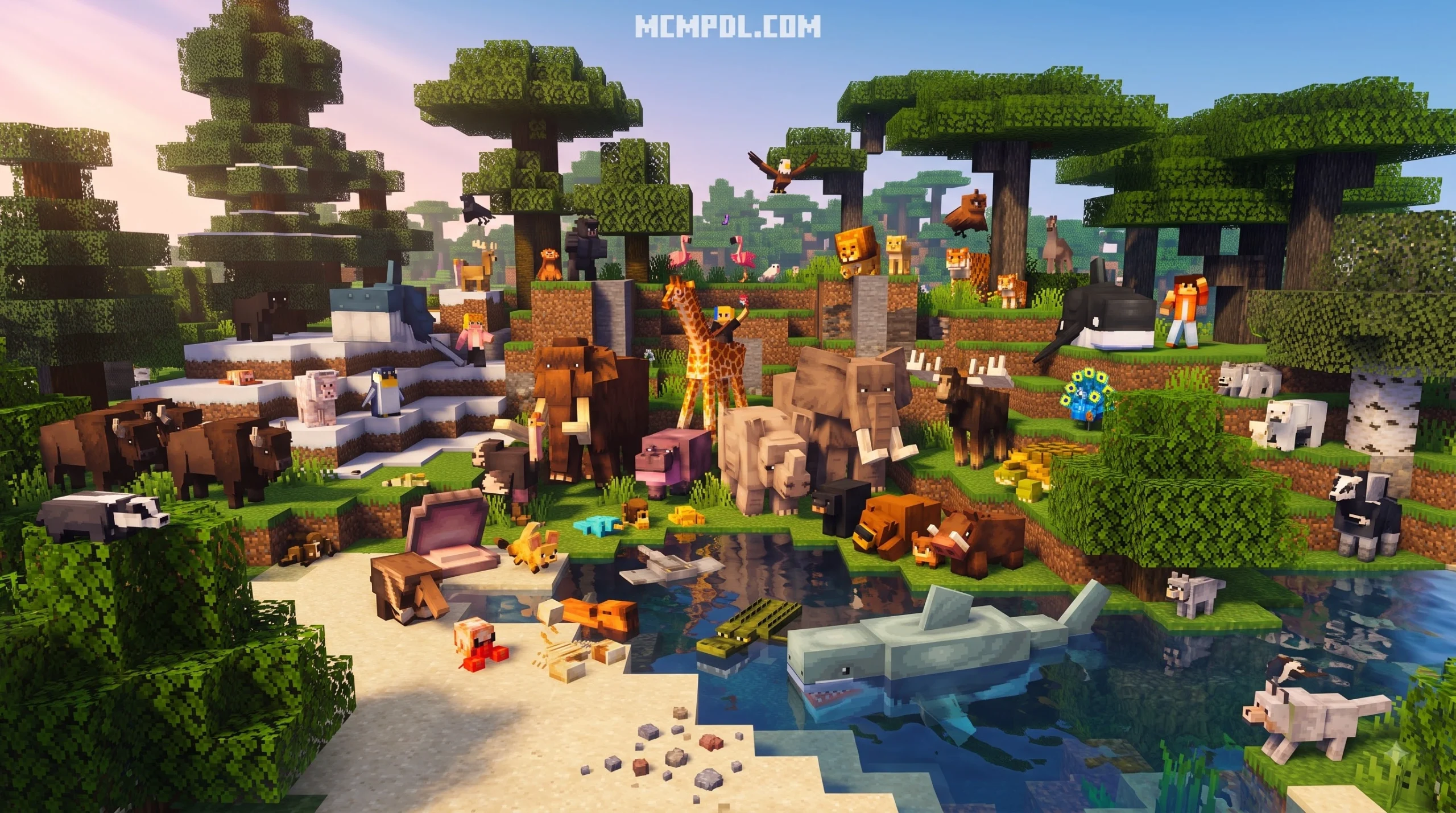
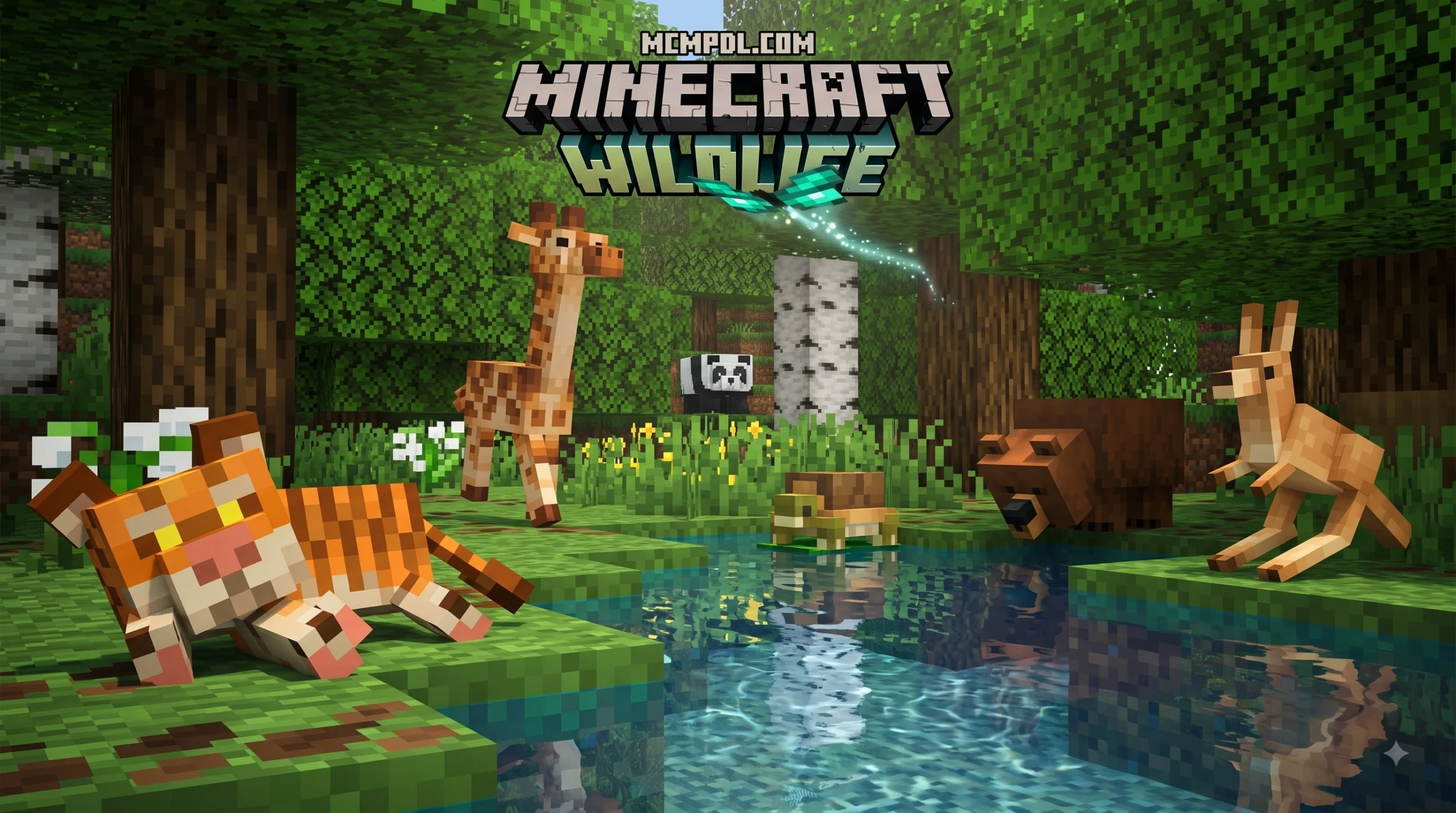
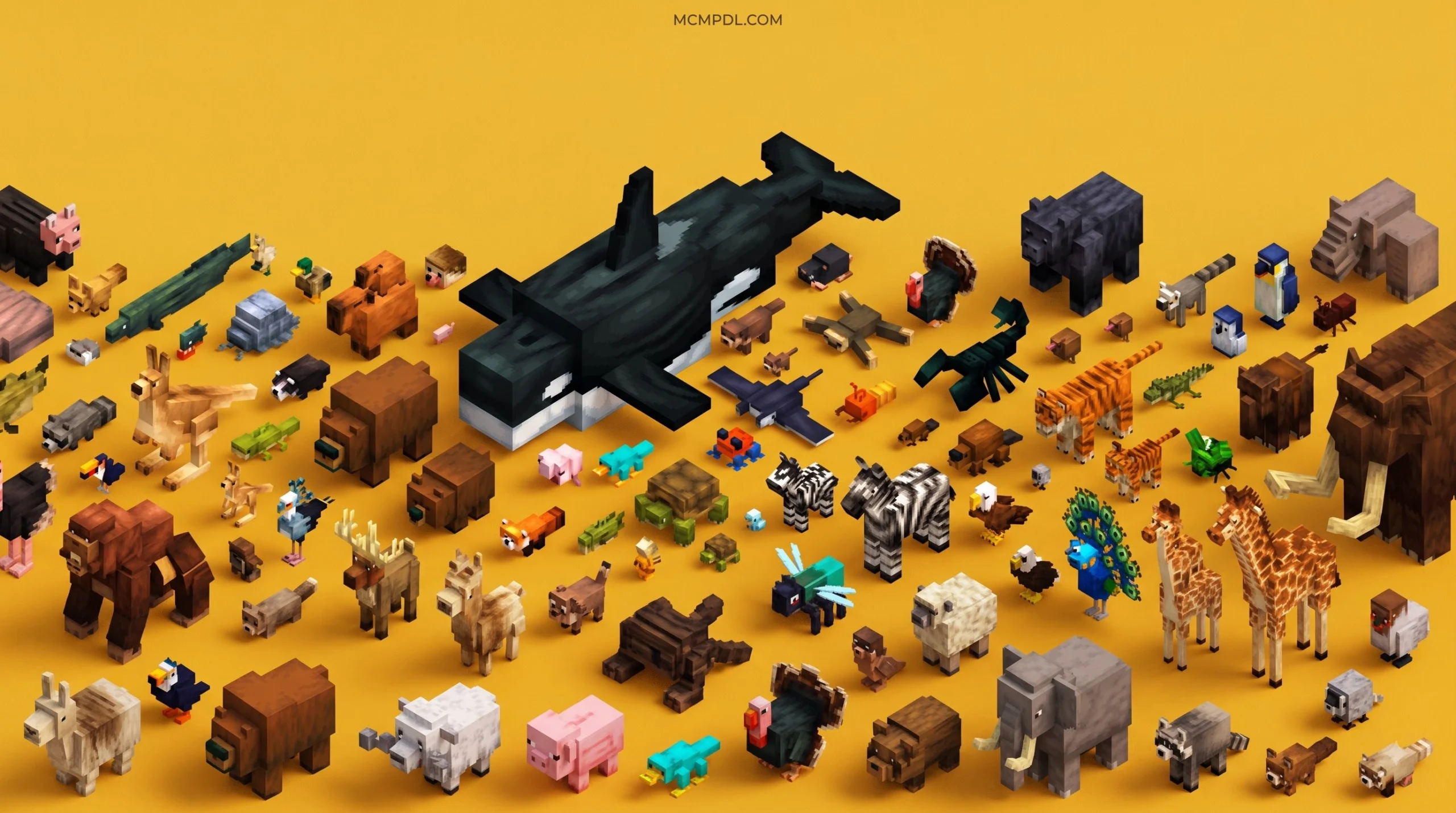
The Naturalist Addon for Minecraft PE/Bedrock expands the Overworld with 100+ new wildlife mobs in earlier releases and 200+ animals, babies, and variants in newer versions. Animals spawn in suitable biomes, from forests and deserts to savannas, oceans, and flower-filled areas. Many can be tamed, bred, transported, or ridden, while others add ambient life through behaviors such as hunting, flocking, sleeping, and avoiding predators.
It is designed as a vanilla-friendly wildlife expansion. Vanilla mobs remain in the game, but exploration feels less empty as each biome gains its own creatures and encounters.
This guide covers the complete feature set, including notable animals, biome spawning, custom tools such as the Capture Net and Knapsack, version differences, installation steps, multiplayer use, and practical performance settings for Minecraft PE, consoles, and Windows.
Complete Overview of Animals and Ecosystem Biodiversity
When we explore a vanilla Overworld, vast forests and plains can occasionally feel empty. The Naturalist Addon changes this fundamentally by integrating an intricate ecosystem where creatures interact not just with the player, but with one another. Rather than simply adding cosmetic fauna, the addon establishes authentic predator-prey dynamics, complex food chains, and biome-appropriate habitats. Similar to how players expand their worlds with an expanded entity ecosystem, Naturalist turns passive terrain into an active ecological simulation.
Across its major releases, the addon introduces anywhere from 120 to over 200 distinct animal models, variants, and custom baby iterations. These creatures are distributed across the food chain:
- Apex Predators: Lions, cheetahs, bears, and birds of prey actively track smaller game, prowling through the brush and coordinating attacks.
- Herbivores and Foragers: Deer, zebras, elephants, and boars graze across grasslands, forming family herds that react dynamically when startled.
- Scavengers and Opportunists: Raccoons, vultures, and hyenas linger near active hunting grounds or wander into player settlements to snatch dropped crops.
- Specialized Micro-Fauna: Amphibians, reptiles, and insects maintain ecological health, pollinating flora or decomposing forest litter.
Exploring Wildlife Biomes with the Naturalist Addon for Minecraft PE/Bedrock
Wildlife distribution in the addon relies on strict environmental parameters. Venturing across different biomes yields entirely distinct animal communities, which pairs excellently when exploring custom environmental terrain.
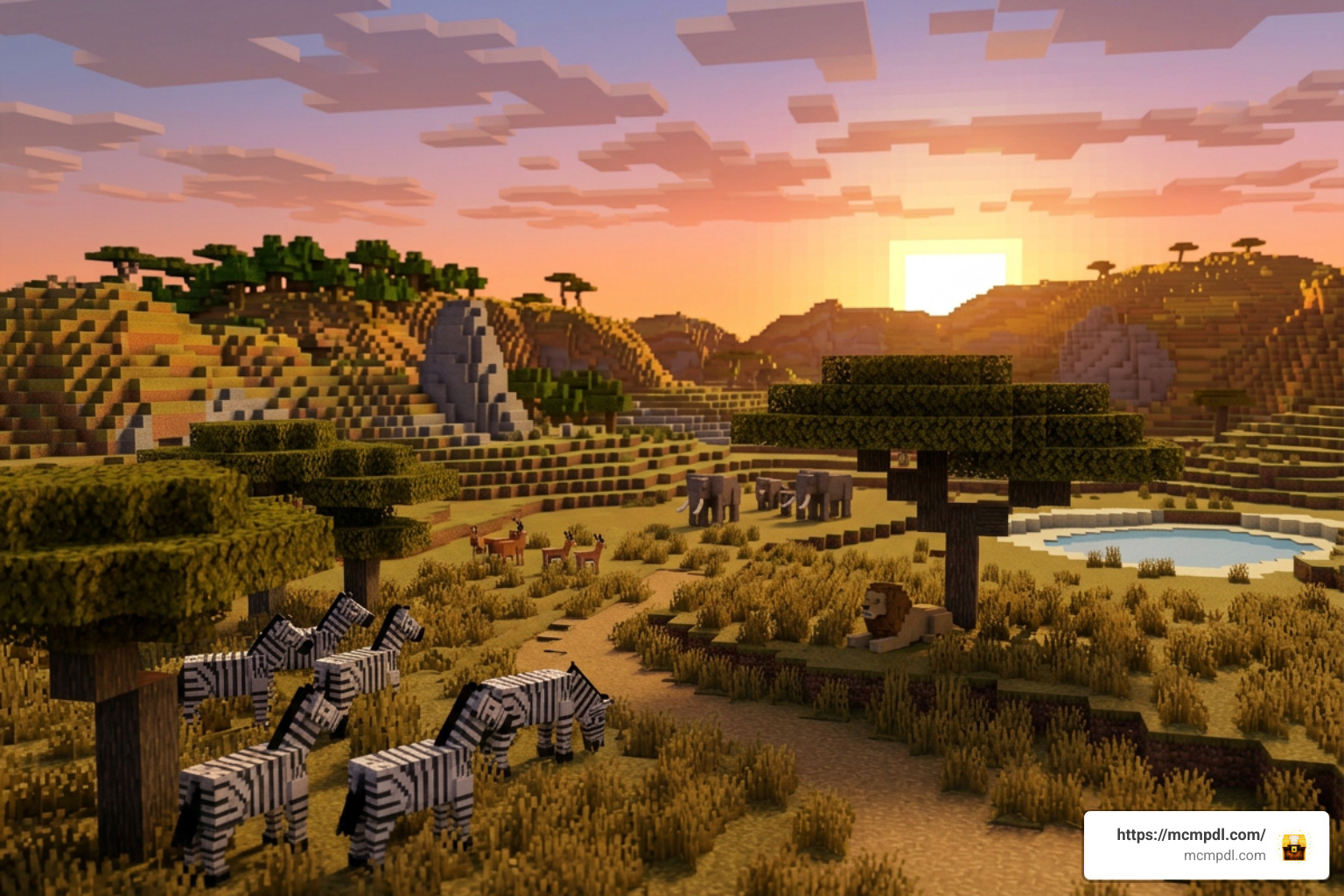
- Savannas and Plains: Sunlit plains feature herds of zebras, towering giraffes, and charging rhinos. Prides of lions stalk through tall grasses, while secretary birds hunt venomous snakes across rocky outcrops. Elephants gather around watering holes, using their trunks to spray cooling water.
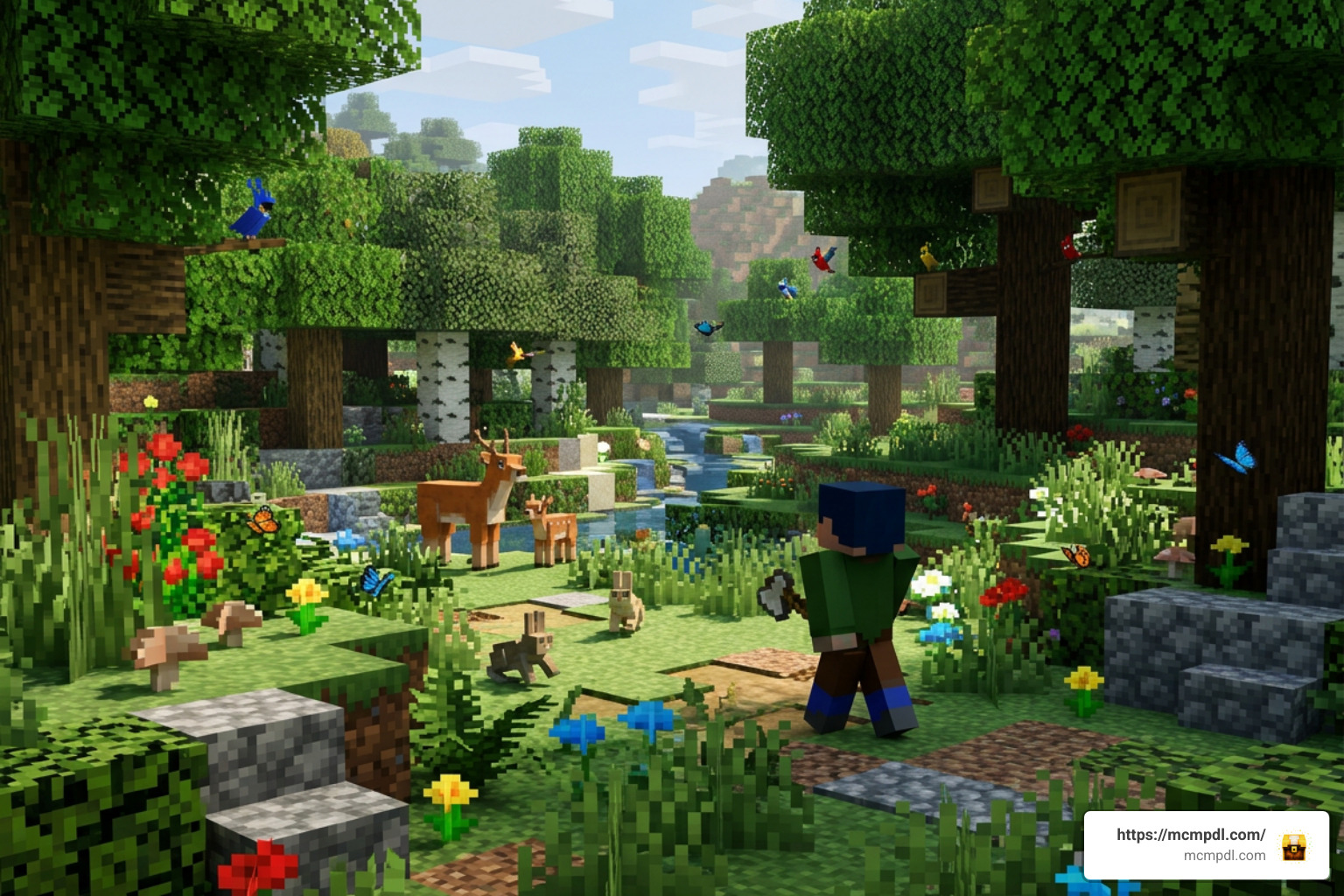
- Temperate and Old Growth Forests: Woodland biomes host white-tailed deer, brown bears, foxes, and wild turkeys that scatter in synchronized flocking formations at the first sign of danger. Up in the canopy, songbirds flutter between branches.
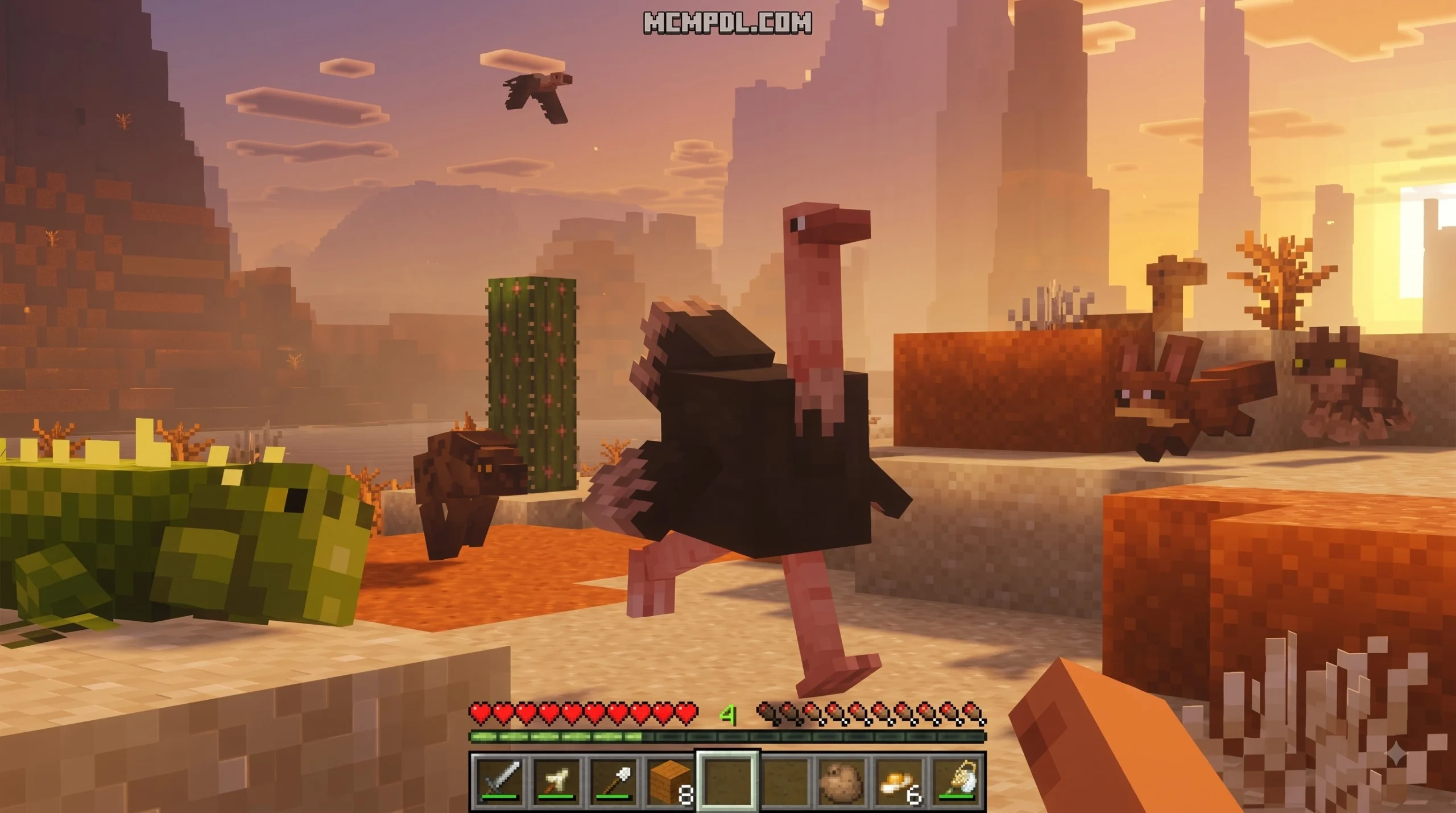
- Deserts and Badlands: Arid regions feature rattlesnakes basking on sandstone, roadrunners darting across dunes, and resilient camels and ostriches navigating harsh sandstorms.
- Jungle and Cherry Groves: Lush canopies come alive with tree frogs, colorful toucans, chattering monkeys, and rare apex hunters like leopards and white tigers stalking through dense brush.
Micro-Fauna, Insects, and Marine Species
In addition to megafauna, Naturalist introduces hundreds of smaller creatures, complementing broader mod setups that feature diverse mob variations.
- Active Anthills: Ants operate in disciplined colonies, marching along trails to gather dropped food items and physically carrying them back to expand subterranean nests.
- Meadow Pollinators: Dragonflies and vibrant butterflies drift through flower forests, landing on blossoms to rest before taking flight again.
- Terrestrial Gastropods: Snails glide across mossy stones and riverbanks, retreating into their shells whenever players or potential predators approach too quickly.
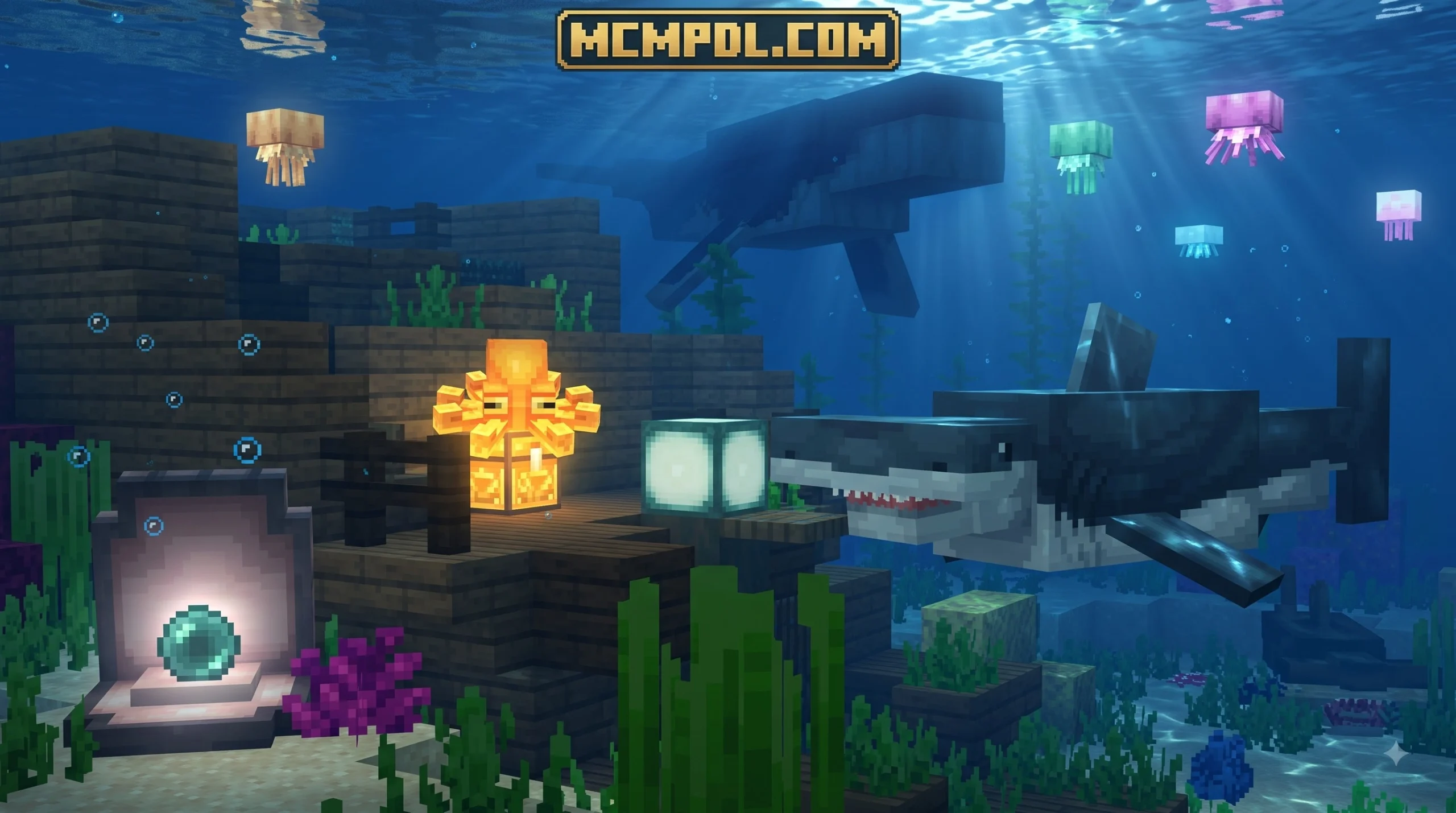
- Marine and Aquatic Wildlife: Rivers and deep oceans teem with life, including graceful octopuses camouflaging against sea beds, snapping turtles lurking in swamps, and electric eels delivering stunning shocks to unwary divers.
Core Gameplay Mechanics in the Naturalist Addon for Minecraft PE/Bedrock
The intelligence of the wildlife sets Naturalist apart from standard mob packs. Entities feature distinct day-night cycles, unique sensory radii, and realistic fear triggers. Nocturnal predators hunt exclusively after dusk, while diurnal birds roost in trees once the sun dips below the horizon.
| Animal Species | Native Biome | Primary Behavior & AI Routine | Preferred Taming / Breeding Item | Key Utility Drop / Output |
|---|---|---|---|---|
| Lion | Savanna | Pack hunting, territorial stalking | Raw Venison / Prime Beef | Lion Mane, Tough Leather |
| Elephant | Savanna / Scrubland | Herd protection, trunk water spray | Acacia Leaves / Hay Bales | Thick Hide, Mount Capability |
| Anteater | Jungle / Savanna | Insect hunting, structure locating | Queen Ant | Ant-tracking scent |
| Skunk | Forest / Plains | Defensive spraying, nocturnal foraging | Sweet Berries | Scent Glands (Crafting) |
| Peafowl | Plains / Forest | Crouch-triggered tail displays | Melon Seeds / Beetles | Peacock Feathers |
| Electric Eel | Warm Ocean / Swamp | Bio-electric defense, ambush hunting | Raw Tropical Fish | Bio-Luminescent Slime |
| Butterfly | Meadows / Flower Forest | Pollination, decorative flight | Flower Nectar | Butterfly Wings |
Taming, Breeding, and Mount Systems
Many creatures in the Naturalist Addon can be tamed and integrated into survival routines, expanding upon traditional domestic livestock mechanics. Smaller creatures, such as skunks, can be befriended using sweet berries, while anteaters require an offering of a rare queen ant. Once tamed, anteaters can assist players by sniffing out underground resources and hidden points of interest.
Larger quadrupeds introduce functional rideable wilderness mounts. Elephants, once fully grown and fitted with specialized gear, can carry heavy cargo across long distances, clear paths through brush, and carry multiple players.
Breeding follows distinct rules: animals require species-specific diets and calm, secure environments free of nearby predators. Offspring feature custom baby models with distinct proportions and playful animations that mimic their real-world counterparts.
Custom Tools, Habitat Gear, and Functional Accessories
To interact with this expanded ecosystem, the addon introduces dedicated equipment, habitat decor, and utility items:
- Capture Net: Standard leads break or fail on tiny hitboxes. The Capture Net lets players catch, store, and safely transport butterflies, fireflies, snails, and small frogs directly into inventory slots.
- Knapsack: A portable storage expansion that lets field biologists carry extra specimen jars, feed, and tools without filling regular inventory space.
- Field Encyclopedia: An in-game reference guide providing comprehensive profiles on every animal’s diet, preferred biome, taming mechanics, and drop tables.
- Pet Cages and Hamster Wheels: Functional furniture pieces that allow builders to create functional enclosures, transport delicate fauna safely, or design custom terrariums.
- Pacifiers and Accessories: Specialized items designed to soothe agitated wildlife during relocation, alongside cosmetic wearables like Butterfly Wings and craftable decorative balloons made using skunk scent glands.
Version Differences, Compatibility, and Performance Optimization
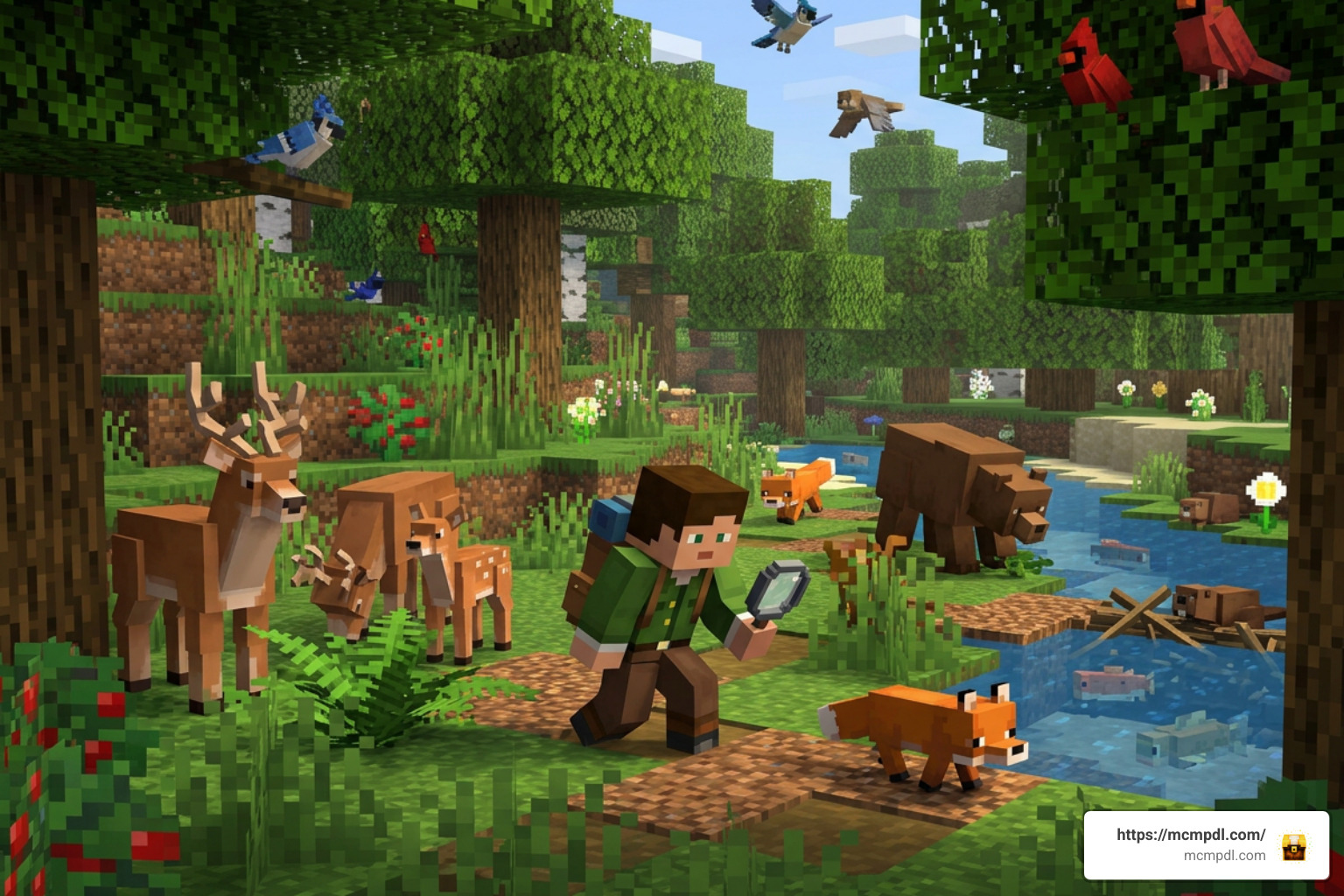
The Naturalist Addon has evolved continuously since its debut. While earlier releases such as Naturalist 3.2 established the foundational 100+ mob roster, modern updates like Naturalist 26.1 expand the scope to over 200 animals and baby variants. These newer builds include deep compatibility with environmental packs like Biomes O’ Plenty, smoother Molang animations, and full optimization for current Bedrock updates on the Starfish Studios Marketplace release.
How to Install and Activate the Naturalist Addon for Minecraft PE/Bedrock
Installing the addon depends on your chosen platform and file type:
- Marketplace Installation: Search for the addon in the in-game Marketplace, purchase or download it via the Marketplace Pass, and click Download. Create a new world or select an existing world’s edit pencil, scroll down to Add-Ons, and activate both the Resource Pack and Behavior Pack.
- Manual
.mcaddonFile Import: Download the.mcaddonfile to your mobile device, console storage, or Windows PC. Open or tap the file to launch Minecraft, which triggers the automatic import process. - World Settings and Experimental Toggles: Navigate to your world settings. Ensure that the following experimental options are enabled if prompted by your version:
- Holiday Creator Features
- Custom Biomes
- Beta APIs / Molang Features
- Final Activation: Confirm that the behavior pack appears under the active world list, launch the world, and allow new chunks to populate with wildlife.
Performance Settings and Troubleshooting on Low-End Devices
Rendering hundreds of new entities with advanced AI routines can strain lower-end mobile devices or older consoles. We recommend using these optimization strategies to maintain a stable 60 FPS:
- Adjust Simulation Distance: Lower your world’s simulation distance to 4 Chunks. This restricts background AI calculations for distant mobs without reducing visible landscape terrain.
- Limit Captive Breeding Counts: Confining dozens of complex entities into small holding pens concentrates AI pathfinding ticks in a single chunk. Distribute your zoo exhibits across broader areas.
- Manage Render Distance and Particle Effects: Reduce render distance on mobile devices to 8–10 chunks, and disable “Fancy Leaves” or intensive particle settings in the main video options.
- Utilize Name Tags Wisely: Wild entities despawn according to vanilla chunk rules, preventing entity overflow. Only apply Name Tags to pets and exhibited specimens you wish to keep permanently.
Frequently Asked Questions
Does the Naturalist Addon replace existing vanilla mobs?
No. The Naturalist Addon introduces entirely independent entity identifiers that coexist seamlessly alongside default vanilla mobs. Cows, pigs, sheep, and zombies continue to spawn according to their regular tables without alteration, preserving core survival gameplay balance.
Is the Naturalist Addon free or paid on the Marketplace?
The official Bedrock release by Starfish Studios is available on the Minecraft Marketplace for 1340 Minecoins (approximately $7.02 USD). It is also frequently included as a playable title under the Minecraft Marketplace Pass subscription service.
Can you use Naturalist in multiplayer worlds and Realms?
Yes. The addon is fully compatible with local LAN worlds, dedicated servers, and Bedrock Realms. Only the world host needs to own and apply the behavior and resource packs; connected players will automatically download the necessary cache files upon joining.
Conclusion
The Naturalist Addon completely revitalizes the Minecraft Overworld, transforming quiet biomes into lively ecosystems filled with dynamic predators, functional mounts, and ambient micro-fauna. Whether you are constructing custom safari reserves, exploring dense old-growth forests, or breeding rare mounts, the addon delivers an authentic Vanilla+ survival experience.
To further expand your Bedrock adventures with new dimensions, magic systems, and custom mechanics, discover more Bedrock addons and mods on our homepage!
1 thought on “Naturalist Addon for Minecraft PE/Bedrock”